A misaligned commercial door frame causes problems you can’t ignore. The door may scrape the floor, stick when opening, or leave a gap that lets in cold air and noise. Over time, this extra friction wears out the hinges, damages the door edge, and makes the lock harder to use. For any business, a door that doesn’t close properly is also a safety risk and can lead to more costly commercial door repair issues if left unchecked.
Many alignment problems can be fixed with basic tools and a careful approach. You don’t need to be an expert to make things better. Sometimes a simple adjustment gets the door working again, improves security, and helps you avoid a larger commercial door repair bill later.
Common Causes of a Misaligned Commercial Door Frame
Understanding why a commercial door frame becomes misaligned helps you fix the root cause. Here are the most common reasons this happens in shops, warehouses, and office buildings:
- Loose hinge screws: The constant weight of a heavy commercial door can loosen screws over time. When the screws back out even a little, the door sags, and the gap at the top and the latch side changes.
- Building settling: All buildings shift slowly as the ground beneath them compacts. This movement can pull a door frame out of square.
- Warped wood or metal: Changes in humidity or temperature can twist a wooden frame. Metal frames in unheated spaces can also expand and contract enough to throw off alignment.
- Foundation problems: Cracks in the floor or wall near the door opening often indicate that the foundation is moving. This directly affects the frame.
- Worn or bent hinges: High-traffic doors are slammed, kicked open, or propped with wedges. Bent hinges cause the door to hang at an angle, no matter how tight the screws are.
- Improper installation: If the frame was never installed level or plumb, it will only worsen with use.
Tools You May Need to Repair a Misaligned Commercial Door
Before you begin, gather a few basic tools. Having everything ready helps the job go smoothly.
- A sturdy screwdriver (flathead and Phillips) or a drill with driver bits
- A 4-foot level (or longer if you have one)
- Wood shims or plastic composite shims
- A hammer
- Replacement screws (3-inch construction screws often work better than short hinge screws)
- A utility knife (for cleaning out old paint or caulk around the frame)
- A pry bar (in case you need to gently shift the frame)
Also Read: Door Installation Tools Every Homeowner Needs
Steps to Fix a Misaligned Commercial Door Frame
The steps below cover the most common fixes. Try one or more, depending on what you find during your inspection. Work slowly and check your progress after each adjustment.
-
Inspect the Hinges and Screws First
Open the door fully and inspect each hinge leaf. Wiggle the door up and down. If you see the hinge leaves rubbing against the frame or the door edge, the screws are loose. Mark any spot where the wood or metal around a screw hole looks crushed or stripped.
On a metal frame, check whether a screw has rusted or snapped off. This inspection shows what needs tightening or replacing
-
Tighten or Replace Loose Screws
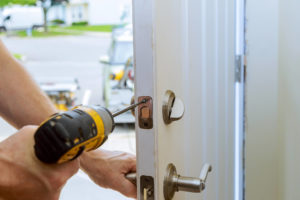
Using your screwdriver or drill, tighten each hinge screw slowly. Do not overtighten, as that can strip the hole. If a screw keeps spinning and never grabs, the hole is worn out. Remove that screw and replace it with a longer one. A 3-inch construction screw can reach past the frame and bite into the stud behind it. That often pulls the entire hinge side of the frame back into place.
If the frame is metal, you may need a self-tapping screw of the same size. After tightening, close the door and check the gap between the door and the frame on all sides. A more even gap indicates the fix is working.
-
Check the Frame for Gaps and Add Shims
Place your level against the hinge side and the top of the frame. If the frame isn’t straight, you’ll need to add shims. Check behind the trim or weatherstripping for gaps between the frame and the wall. Slide a thin wood shim into any gap larger than one-eighth of an inch. Tap it in gently with a hammer, then check the level again. Don’t try to move the frame too much at once. Add shims in pairs on both sides of a gap to keep the pressure even.
Many commercial door repairs involve re-shimming frames that have shifted over time. Once the frame is level and straight, secure the shims with a finish nail or a screw to keep them in place.
-
Adjust the Strike Plate
When the door aligns well but still will not latch, the problem is usually the strike plate. Look at the mark where the latch bolt hits the metal plate. If the bolt is hitting too high, too low, or just catching the edge, move the strike plate slightly. Remove the plate and use a metal file to widen the opening in the direction the bolt needs to go. Sometimes moving it by one-sixteenth of an inch is enough.
You can also fill the old screw holes with a wooden toothpick or a small piece of a shim, snap it off flush, and drill new pilot holes in the corrected spot. Reattach the plate and test the latch. The bolt should slide in smoothly without pushing the door up or down.
-
Test the Door and Make Small Tweaks
Open and close the door several times at normal speed. Watch the gap along the top and the latch side. Listen for rubbing. If the door still drags slightly on the floor, a thin shim behind the bottom hinge can lift that corner a bit. If the top corner is sticking against the frame on the latch side, a shim behind the top hinge or a slight bend in the hinge knuckle might help.
After you are satisfied with the swing, tighten all hardware one final time. Good alignment means the door stays where you leave it when opened halfway, and the latch clicks easily without having to lift or push down on the handle.
When a Simple Fix is Not Enough
Some misalignment problems go deeper than loose screws or missing shims. If you notice any of these signs, the door frame likely needs professional attention.
- The frame is visibly bent or cracked
- Large cracks run through the surrounding wall
- The floor has sunk or heaved near the opening
- The door binds even after shimming and adjusting all hinges
- The metal frame has pulled away from the wall more than a quarter inch
In these situations, forcing the door to work can damage both the frame and the door. Professional commercial door repair in Rochester can address structural issues that cause misalignment. A technician can check if the opening has shifted, weld a cracked frame, or replace damaged anchor points so the door works properly.
Also Read: How to Choose a Commercial Door Repair Company
Let Rochester Door Company Handle it!
When a misaligned door frame needs more than a quick DIY fix, the Rochester Door Company team is ready to help. We’ve repaired many commercial entrances in the area, from retail stores to warehouse bay doors. Our repair process examines everything, including the frame, hinges, wall structure, and door closer. We restore the opening to factory-level alignment and make sure it stays that way.
For reliable commercial door repair in Rochester, you can count on our experienced technicians. We use strong hardware and proven shimming methods that withstand daily business use. Your safety and your building’s security are important to us, so we arrive on time, explain the work clearly, and make sure your door works smoothly.